
Who we are not:
- We are not The Research Machine
- We are not Experts with all the Answers
- We are not solely focused on publications (cause we don’t know how to write text)
Who we are –> interdisciplinary researchers combining biostatistics and bioinformatics to explore complex biological systems
- this is what we did with Song
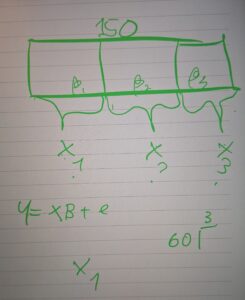
- Literature from prof. Song Liu lecture
- parallel fishing
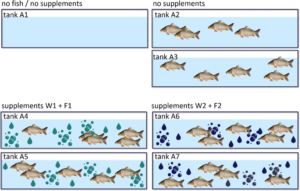 This pilot study was published AFTER the main study. So it is non-OpenMP parallel publishing.
- Special Guest: Dr. Song LiuNext week – 16-18 a specialist – Dr. Song Liu in Data Science and Deep Learning from University of Bristol will be visiting our team. Everybody is invited to a special lecture on 17.Nov 10:00 – 13:00. For More information please contact Marek Sztuka.
- a heavy [interesting, sad ??] topic
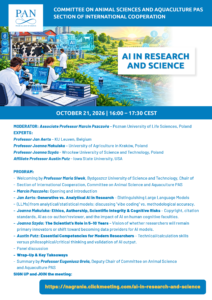 The scientist role in 5 – 10 years: vision of whether researchers will remain primary innovators or shift towards becoming data providers for AI models. And I see a problem – we do not generate any data, we use them. << recording.
- Seminar: Paweł Morzywołek – Beyond Average Treatment Effects: Variable Importance for Treatment Effect HeterogeneityIm happy to extend invintation from Statisctical Institute at Wroclaw University which will be hosting PhD Paweł Morzywołek, biostatistic specialist. Title of the seminar: Beyond Average Treatment Effects: Variable Importance for Treatment Effect Heterogeneity. Time: Tuesday 13.10.2026 14:15-16:00 Place: room 603, Mathematical Instytute, pl. Grunwaldzki 2, University of Wroclaw
- Seminar – Approaches to the analysis of single cell expression in cancer by Cédric Moris
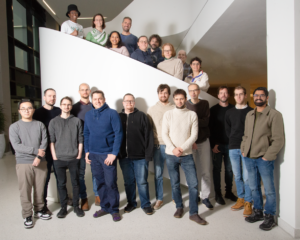 This Thursday at 10:00 there will be hybrid seminar with special guest Cédric Moris from Core Unit Bioinformatics (CUBI), associated with the Berlin Institute of Health, Charité – Universitätsmedizin Berlin, and MDC Berlin. Title: Approaches to the analysis of single cell expression in cancer. Feel invited to our physical location “Sala Seminaryjna Katedry Genetyki”, via the google meet link, or write me an email.
- Cédric and Wroclaw’s Notredame
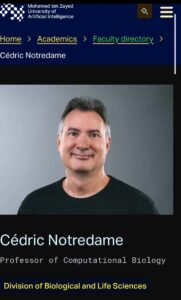 MS’s graphical summary of Cedric’s visit is on-title-click T.T
- Dawid
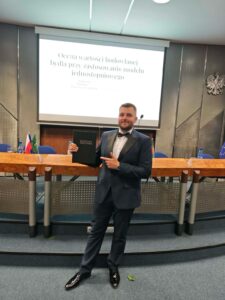 Again, Dawid had to wear his bow tie all day. Why? If you know Polish, you can discover here (click the post to get the link). And it went VERY well only for the science part, because Dawid forgot to order weather.
- CIBB
 How do you associate phenotype to genotype? ꟷ> GWAS, of course. And if you only have one affected person? ꟷ> Need to get more data, of course. But if it is some strange, clinically undefined disorder? ꟷ> Then it is impossible.
Projects
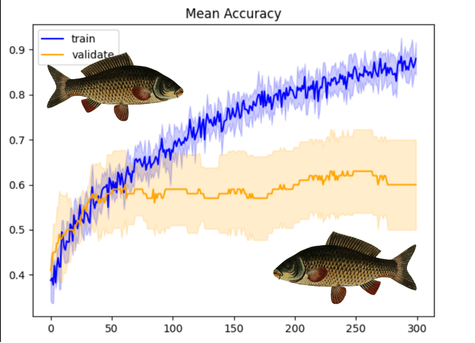
(OPUS-21) Bioinformatic modelling of the impact of probiotic supplementation on microbiomes of breeding ponds and of digestive tract of the Common carp
(OPUS-26) Molecular mechanisms of phenotype elasticity of domestic chicken breeds
Analysis of epistasis by model dimensionality reduction
The project is related to the analysis of hoof and leg quality data scored on cows. The major aim is to estimate additive, dominance and epistatic effects for those traits. Genomic information is provided by the SNP microarray.
Bioinformatic modelling of the impact of probiotic supplementation on microbiomes of breeding ponds and of digestive tract of the Common carp (Cyprinus carpio)
The goal of the project is to assess the dynamics of water, sediment, and fish intestinal microbiota diversity as well as the differences in water metatranscriptome compositions in earthen ponds, which express practical fish breeding conditions.
Population Structure Analysis of Globally Diverse Bull based on 1000 Bull Genome data Genomes
By analyzing 432 global bull genomes using advanced probabilistic models, this project uncovers highly complex and continuous population structures and key regions under selection pressure, ultimately providing insights to support sustainable cattle breeding and genetic management.
Resolving genetic predisposition to clinical mastitis based on whole genome sequences of 32 cows
The major aims of this study is to use the whole genome DNA sequence of 32 individuals to identify mononucleotide polymorphisms as well as the Copy Number Variations (CNVs) which are present in the genome of domestic cattle. These polymorphisms will be then used to find genes or genomic regions responsible for the risk of clinical mastitis.